
Summary: Aggressive dog behavior toward family members inside your home stems from fear, anxiety, or unclear boundaries, but you can transform this behavior with the right approach. Understanding your dog’s triggers, establishing clear leadership, and addressing specific issues like food guarding or territorial aggression creates lasting change. Dog Training Laurie’s Way specializes in in-home training where these behaviors actually occur, developing personalized plans that work for your dog’s unique temperament and your family’s specific situation.
Understanding Why Aggressive Dog Behavior Toward Family Members Happens
Before you can address aggression, you need to understand what’s driving it. Your dog isn’t being aggressive because they’re mean or because they don’t love you. Aggression is almost always rooted in fear, anxiety, lack of clear leadership, or confusion about their role in your household. Dogs are pack animals, and when they don’t understand the family structure or feel insecure about their place in it, they may try to establish control through aggressive behaviors. The good news is that once you identify the root cause, you can begin to modify the behavior effectively.
Recognizing the Warning Signs Before Aggression Escalates
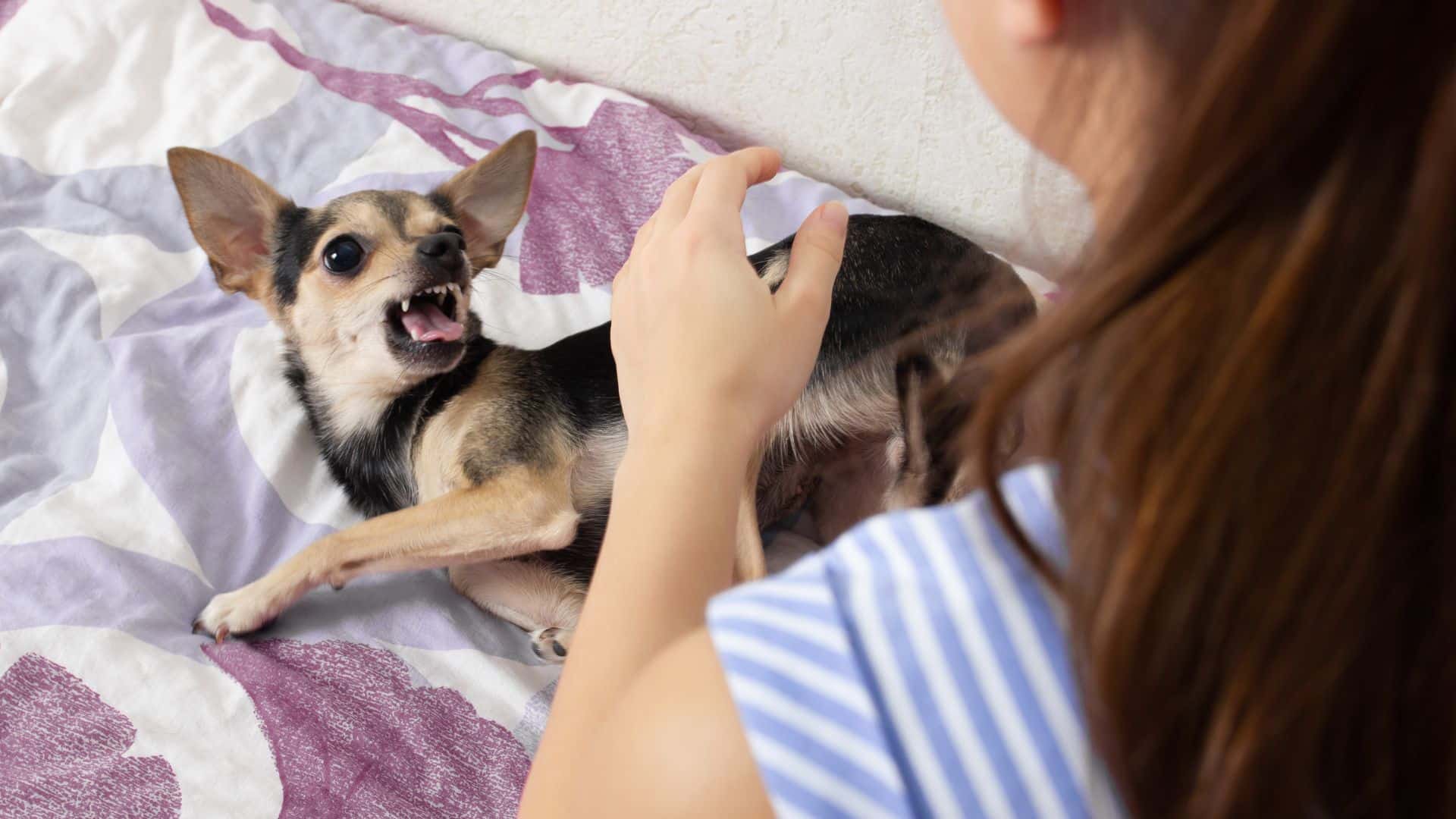
Your pup will typically give you warning signs before exhibiting aggressive dog behavior toward family members. A stiff body posture, raised hackles, intense staring, or a low growl are all ways your dog communicates discomfort or a warning. You might notice your dog’s ears pinned back, their tail tucked or held high and rigid, or their mouth closed tight with tension in their jaw. Some dogs will show “whale eyes,” where you can see the whites of their eyes as they track movement without turning their head.
Pay attention to the situations that trigger these warning signs. By identifying behavior patterns, you can start to predict when your dog might react and take steps to manage the situation.
Dog Fact: A growl is your dog’s way of saying, “I’m uncomfortable” before resorting to a bite. Never punish a dog for growling.
Handling Aggressive Dog Behavior Toward Family Members
It’s heartbreaking when your pup is perfectly fine with you but shows aggressive dog behavior toward family members. Targeted aggression often happens because your dog has formed a strong bond with one person and views others as threats to that relationship, or because different family members have inconsistent rules and responses. Your dog might also be reacting to differences in how people move, speak, or interact with them.
Children, in particular, can trigger aggression because their movements are unpredictable, their voices are high-pitched, and they may not understand how to respect a dog’s boundaries.
The person your dog is aggressive toward needs to become the primary source of good things in your dog’s life. They should feed meals, give treats, and engage in fun activities like walks or play. The person your dog favors should step back temporarily from these activities. If your dog is aggressive toward children, you need to actively supervise all interactions, teach your children how to behave around the dog, and create safe spaces for your dog when they need a break. Never leave young children unsupervised with a dog who has shown any aggressive behavior, regardless of how much progress you’ve made.
Related: Don’t Make Dangerous Mistakes with Aggressive Dogs: 10 Training Solutions That Work
Creating Structure and Clear Leadership in Your Home
Dogs thrive on structure, consistency, and clear communication about what’s expected of them. When your household lacks these elements, your dog may feel anxious and try to take control, often manifesting as aggressive dog behavior toward family members. You need to establish yourself and your family members as calm, confident leaders who make the decisions and set the boundaries.
Start by implementing basic rules that everyone in your household follows consistently. Your dog should sit before receiving meals or before getting attention. They should have designated spaces where they’re allowed and areas that are off-limits. Mealtimes, walks, and play sessions should be scheduled to help your dog feel secure and understand the daily routine. When your dog understands that you control the resources and make the decisions, they can relax and stop trying to manage everything themselves.
See Also: How Owner Routines Affect Dog Behavior At Home
Addressing Territorial and Space Aggression
Some people see aggressive dog behavior toward family members when they enter certain rooms, approach the couch, or try to move the dog from their favorite spot. Territorial behavior happens because your dog has claimed these spaces as their own and feels entitled to defend them. You might have inadvertently reinforced this by allowing your dog to “own” the couch or bed, or by backing away when your dog growled at you. Your dog has learned that aggression works to control space, and now you need to teach them that all spaces in your home belong to you, and they’re only allowed in them with your permission.
Begin by making your dog work for access to preferred spaces. If your dog loves the couch, they must sit and wait for an invitation before jumping up. Practice having your dog get on and off furniture on command, rewarding compliance with treats and praise. If your dog guards a particular room or area, start by controlling access to that space. You can close doors or use a baby gate to prevent your dog from claiming it. Gradually reintroduce access, but only when your dog is calm and has followed a command. You should be able to walk into any room in your home, sit on any piece of furniture, and move your dog from any location without aggression.
Managing Food and Resource Guarding Aggression
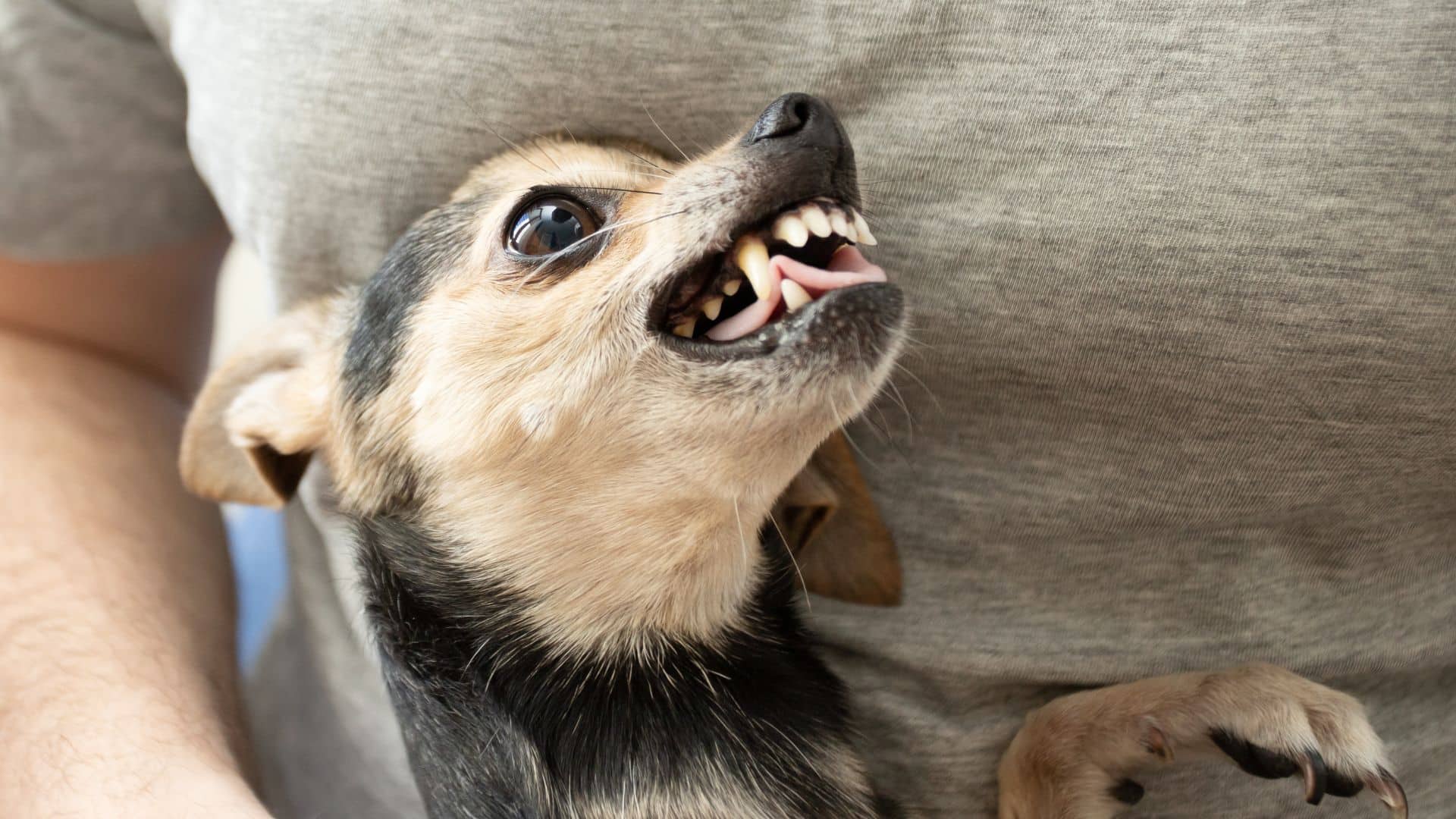
Food aggression is one of the most common forms of aggressive dog behavior toward family members, and it can be particularly concerning when you have children in the home. Your dog might growl, snap, or bite when anyone approaches their food bowl, treats, or high-value items like bones or toys. Resource guarding stems from a fear that their possessions will be taken away, so your dog is trying to protect what they perceive as theirs.
You need to teach your dog that people approaching their food bowl is a wonderful thing that makes good stuff happen, not a threat. Start by hand-feeding your dog some of their meals to build trust and show them that you’re the source of good things. When your dog is eating from their bowl, walk by and toss in a high-value treat like chicken or cheese, then walk away without taking anything. Repeat this process until your dog looks up happily when you approach, anticipating something good.
You May Also Like: Resource Guarding in Dogs: Why Local In-Home Training Works Best
Stop Aggressive Dog Behavior Toward Family Members with Dog Training Laurie’s Way
You might be wondering if you can handle aggressive dog behavior toward family members on your own. While some mild aggression issues can be addressed with dedication and research, moderate to severe aggression requires professional support. The stakes are simply too high. A bite can cause serious injury, create legal liability, and potentially result in losing your dog. Working with a knowledgeable dog behaviorist who understands aggression gives you the tools, confidence, and personalized strategies you need to create real, lasting change.
At Dog Training Laurie’s Way, we’ve helped countless Colorado Springs families transform aggressive dogs into well-behaved, trusted companions. We’ve trained dogs who were biting family members, guarding resources, and displaying territorial behaviors that made home life miserable. Our clients often tell us that we were their last hope before considering rehoming, and they’re amazed at how quickly their dog’s behavior improved with the right approach.
Get in touch with Dog Training Laurie’s Way today and schedule your in-home consultation. Laurie will work with you and your family to implement strategies to combat aggressive dog behavior toward family members, building the trusting relationship between you and your dog that you’ve always wanted.
Frequently Asked Questions About Aggressive Dog Behavior Toward Family Members
Can aggressive dog behavior toward family members be fixed, or is my dog just naturally mean?
Your dog isn’t naturally mean. Aggression is almost always rooted in fear, anxiety, confusion about household boundaries, or lack of clear leadership. With the right approach, including consistent structure, personalized training strategies, and addressing specific triggers, most dogs can learn to be calm and trustworthy around all family members. The key is understanding what’s driving the behavior and implementing solutions that work for your dog’s unique temperament and your household’s specific situation.
How long does it take to stop a dog from being aggressive inside the home?
The timeline varies depending on the severity of the aggression, how long the behavior has been happening, and how consistently you implement training strategies. Some dogs show improvement within a few weeks, while more serious cases may take several months of dedicated work. Contact Dog Training Laurie’s Way for an in-home consultation where we’ll assess your dog’s specific situation and give you a realistic timeline for the personalized training plan we’ll develop together.
Is it safe to keep a dog who has bitten a family member, especially with children in the home?
Safety must always be your top priority, and any dog who has bitten requires immediate professional assessment and intervention. Many dogs who have bitten can be successfully rehabilitated with proper training, management, and supervision, but you need a personalized plan that addresses the root cause of the aggression and includes safety protocols during the training process. Never leave children unsupervised with a dog who has shown aggressive behavior, regardless of progress made.