
Why Puppies Struggle With Impulse Control
Your puppy’s brain is still developing, and that’s the simple truth behind most of their wild behavior. Just like human toddlers, puppies don’t come pre-programmed with the ability to control their impulses. When your puppy sees something exciting, their brain doesn’t have the “pause button” that adult dogs develop over time. They see the cat, they chase the cat. They smell food, and they jump for the food.
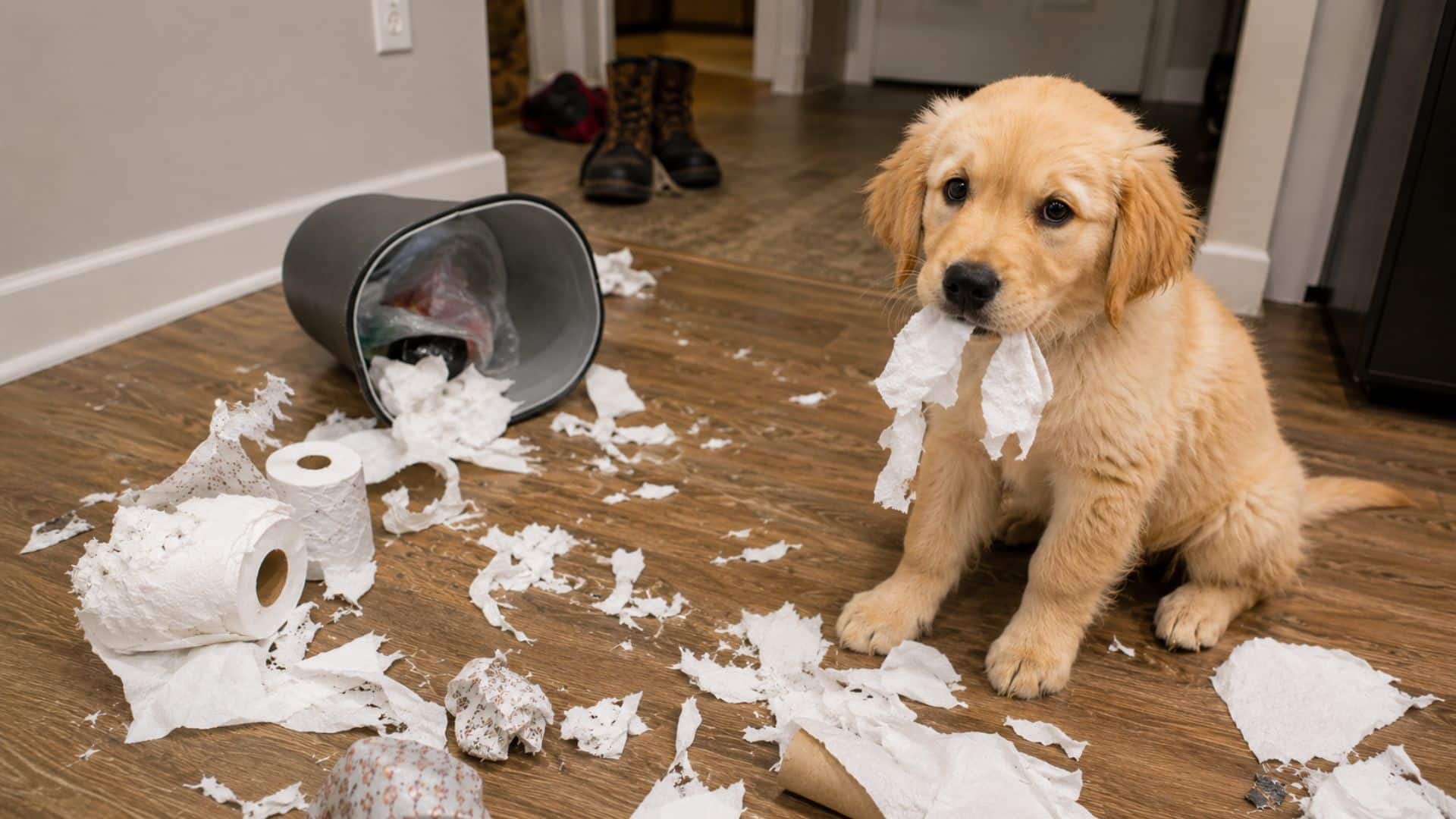
What makes this even more challenging is that everything in your home is new and stimulating to your puppy. That couch you’ve had for five years? It’s a mountain to climb. The kitchen trash can? It’s a treasure chest of smells. Every single thing in your home triggers curiosity and excitement, and your puppy hasn’t yet learned how to manage those feelings. They’re living entirely in the moment and responding to whatever stimulus catches their attention without any thought about consequences or your house rules.
The Home Environment: Where Puppies Struggle with Impulse Control the Most
Unlike a controlled training environment, your home is full of distractions that compete for your puppy’s attention every single moment of the day. Your puppy also picks up on the energy in your home. Puppies feed off this energy and can’t contain themselves, struggling even more to control their impulses.
The layout of your home also matters. Open floor plans mean your puppy can see everything happening in multiple rooms at once. Stairs become race tracks. Hallways turn into chase zones; that’s why Dog Training Laurie’s Way specializes in in-home training. We understand that your puppy’s behavior problems aren’t happening at a pet store or training facility. They’re happening during everyday life inside the house.
Read Also: When Your Perfect Pup Isn’t So Perfect: Understanding In-Home Dog Behavior Problems
Common Impulse Control Issues You’re Seeing at Home
Let’s talk about what this actually looks like in your daily life. Your puppy jumps on everyone who enters your home, and it’s getting embarrassing when friends visit. You’ve tried saying “no” and turning away, but nothing seems to work. Jumping behavior is a classic impulse control issue. Their brain is screaming, “NEW PERSON! THIS IS AMAZING!” and they haven’t learned how to channel that excitement into appropriate behavior.
Counter surfing is another frustration you’re probably experiencing. You turn your back for one second, and your puppy has somehow managed to snag the chicken you were defrosting for dinner. They’re not being sneaky or disobedient in a calculated way. Puppies can’t resist the impulse when they smell something delicious within reach. Their brain hasn’t developed the ability to think, “That smells amazing, but I should wait for my own food.”
You might also notice that your puppy can’t settle down, even when you’re trying to relax. They pace, they whine, they bring you toys, and they generally make it impossible for you to have a peaceful evening at home. Restlessness is another issue that can arise when puppies struggle with impulse control.
In-Home Training Makes All the Difference when Puppies Struggle with Impulse Control
At Dog Training Laurie’s Way, we come to your home and watch where your puppies struggle with impulse control. We see where your puppy jumps on the couch, where they steal food, and where they lose control when guests arrive.
Our personalized training plans are built around your puppy’s unique temperament. We understand that your puppy isn’t just a generic dog. They’re a member of your family with their own personality, triggers, and learning style. Some puppies respond best to food rewards, while others are more motivated by play. We figure out what works for your individual puppy and create a training plan that sets them up for success.
We also teach you how to build impulse control throughout your daily routine, not just during formal training sessions. You’ll learn how to use meal times, doorways, and everyday interactions as opportunities to practice self-control; these small moments add up to big changes in your puppy’s behavior.
The relationship between you and your puppy is at the heart of everything we do. We will help you build a lifelong relationship based on trust, communication, and mutual respect. Your puppy will learn that good things come from listening to you and controlling their impulses, and you’ll learn how to communicate with your puppy in ways they actually understand.
You May Also like: How In-Home Puppy Training Benefits the Whole Family
Building Impulse Control: What Actually Works
Teaching impulse control isn’t about being strict or harsh with your puppy. It’s about helping them develop the mental skills they need to make better choices. One of the most effective strategies is teaching your puppy that patience pays off. When they sit calmly instead of jumping, they get attention. When they wait at the door instead of bolting outside, they get to go out. Your puppy learns that controlling their impulses actually gets them what they want faster than acting on every urge.
We also focus on creating structure in your puppy’s day. Puppies thrive on routine because it helps them know what to expect. When your puppy knows that dinner happens at the same time every day, they’re less likely to constantly beg for food. Predictability helps your puppy develop better impulse control because they’re not in a constant state of uncertainty.
Mental stimulation is another huge piece of the puzzle. Puppies struggle with impulse control when they’re bored. When we work with you, we’ll help you find appropriate ways to challenge your puppy’s mind so they’re not constantly looking for trouble. A mentally satisfied puppy is much more likely to make good choices.
All Puppies Struggle With Impulse Control: End the Chaos with In-Home Solutions from Dog Training Laurie’s Way
The impulse control issues you’re experiencing with your puppy won’t last forever, but they also won’t fix themselves. Your puppy needs your help to develop the self-control skills that will make them a joy to live with. The good news is that with the right approach and personalized training, you can see dramatic improvements in a relatively short time. Puppies are incredibly capable learners; you just need to learn how to speak their language.
At Dog Training Laurie’s Way, we’re here to help you build that lifelong trusting relationship with your puppy, starting right now in your own home. Don’t wait for your puppy’s impulse control issues to become ingrained habits that are harder to break. Get in touch with Laurie Yakish and schedule your personalized in-home training session. Let’s work together to help your puppy develop the self-control skills they need to become the calm, confident companion you’ve always wanted.
Frequently Asked Questions About Why Puppies Struggle with Impulse Control
At what age do puppies develop impulse control?
Puppies begin developing impulse control around 12-16 weeks of age, but the process continues until they’re about 2-3 years old, depending on the breed. Larger breeds often take longer to mature mentally, which means their impulse control develops more slowly than smaller breeds. Consistent training during this critical development period helps your puppy build the self-control skills they need to become well-behaved adult dogs.
How long does it take to train a puppy to have better impulse control?
With personalized, consistent training, most puppies show noticeable improvements in impulse control within 2-4 weeks, though complete mastery can take several months. The key is working with your puppy in your actual home environment where their behavioral issues occur, not just in a classroom setting. Contact Dog Training Laurie’s Way to schedule an in-home training session and start seeing real results in your puppy’s behavior right where you need it most.
Why does my puppy behave well in training class but not at home?
Your puppy behaves differently at home because they’re completely comfortable in their own environment and face constant distractions that don’t exist in a training class. In a classroom, your puppy is slightly overwhelmed by the new setting and other dogs, which actually helps them focus on you temporarily. At home, where they feel confident and know every corner, they revert to impulsive behaviors because the training didn’t address the specific triggers and temptations in your living space.